GN Solids Control has completed delivery of its GNSP-10B solid vacuum pump to a client in Mexico. The unit is a 100% pneumatically driven vacuum pump designed for transferring high-solids-content materials, sludge, and powders. This delivery reflects a growing demand in the Mexican industrial market for safe, low-maintenance material handling equipment that can operate in hazardous environments without electrical components.
Traditional electrically driven vacuum systems present inherent risks when handling flammable dusts, sludges, or volatile compounds. Any electrical component—motors, switches, sensors—can serve as an ignition source. The GNSP-10B eliminates this risk entirely by using compressed air as its sole power source. It carries ATEX certification, meeting European and international standards for explosion-proof equipment. For Mexican clients in petroleum, chemical, and mining sectors, this certification is not a luxury; it is a prerequisite for site approval.
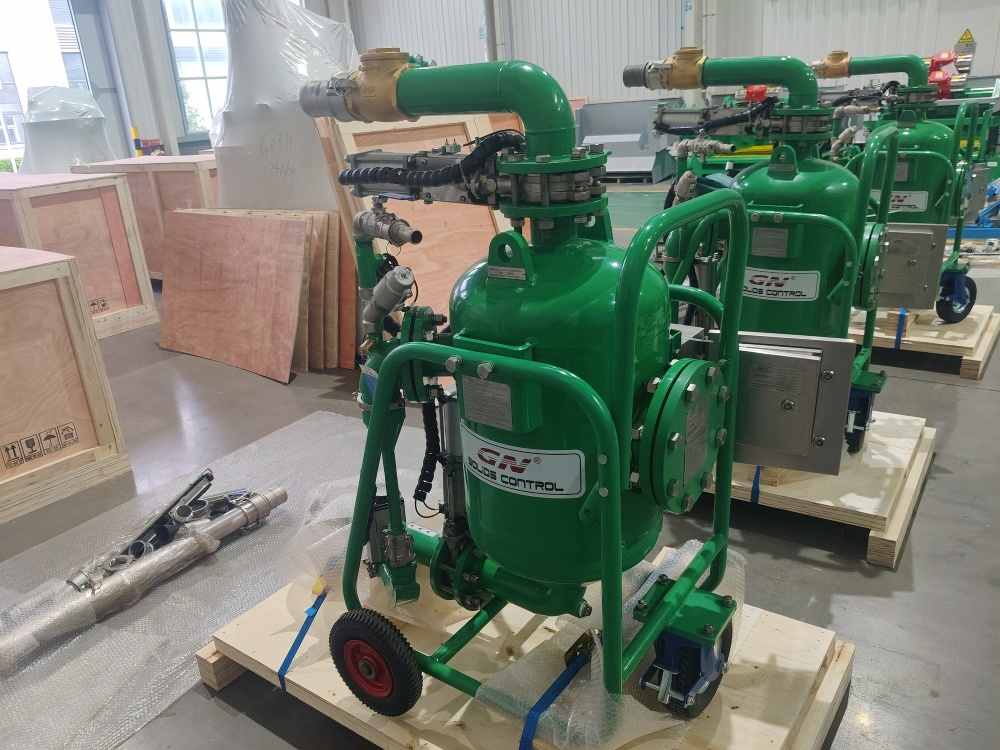
The pump also addresses a practical maintenance concern. Unlike rotary vane or liquid ring pumps, the GNSP-10B contains no rotating parts in the traditional sense. It operates on a pneumatic pulse principle, which means fewer wear components, lower failure rates, and longer service intervals. In abrasive conditions—such as transferring mining tailings or gritty sludge—this design advantage translates directly into reduced downtime and lower total cost of ownership.
The GNSP-10B handles up to 10 cubic meters per hour of material. Its 3-inch (89 mm) inlet and outlet diameter strikes a balance between flow capacity and compact physical footprint. The unit measures 1283 mm × 800 mm × 1370 mm and weighs 320 kg, making it manageable for installation in space-constrained workshops or mobile skid configurations.
The pump achieves a vacuum level of 85 kPa (25 inches Hg), sufficient to draw material from distances up to 50 meters. It can pass particles up to 50 mm in diameter and handle materials with solids content as high as 80%. These parameters suit it to applications ranging from drilling cuttings transfer to dry powder conveyance.
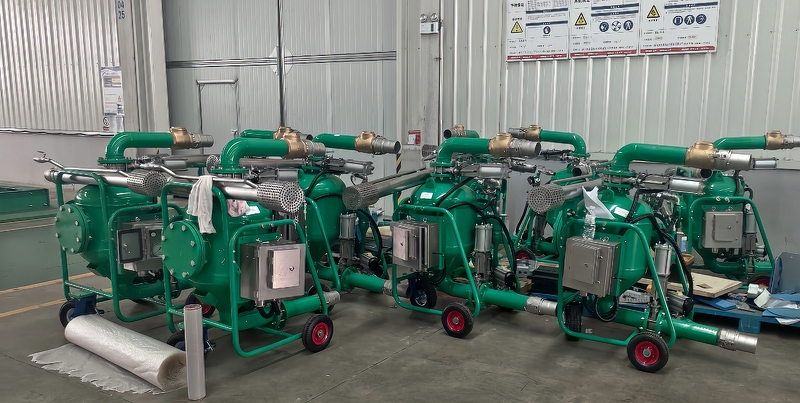
Air consumption is rated at 4.3 cubic meters per minute (150 CFM) at a supply pressure of 550–690 kPa (80–100 PSI). Most industrial facilities already operate compressed air systems in this range, so integration typically requires only a connection point and a filtration unit. The pump operates in automatic mode via internal pneumatic logic, cycling between suction and discharge without manual intervention. Quick-release couplings and Barker tube connections simplify pipe hookup during installation.
The client received the GNSP-10B faster than typical lead times for comparable imported equipment. This was not accidental. GN maintains pre-production inventory of core components and complete units for its solid vacuum pump series. When an order arrives, the company skips raw material procurement and machining stages, moving directly to final assembly and testing. This strategy compresses delivery timelines to a fraction of industry norms.
The approach has supported exports to the Middle East, Africa, Southeast Asia, and South America. The Mexico delivery extends this track record into a market where industrial buyers increasingly evaluate Chinese equipment on performance and service rather than price alone.
Mexico’s industrial base includes significant mining, petrochemical, and manufacturing activity. These sectors generate sludge, tailings, and granular waste that require safe, reliable transfer. The GNSP-10B’s dry conveying method—using air as the transport medium rather than water or oil—reduces secondary contamination and eliminates oil vapor emissions. This aligns with environmental compliance requirements that have tightened across Mexican industry in recent years.
The pump’s automatic operation also supports integration with PLC and HMI systems. While the GNSP-10B itself runs on pneumatic logic, it can be monitored and coordinated through plant control systems, enabling unmanned operation in remote or hazardous locations.
A single pump delivery is not a market transformation. But it does indicate that Mexican industrial buyers are actively evaluating non-traditional suppliers for material handling equipment. The GNSP-10B competes on specific technical merits: explosion-proof design, low maintenance requirements, dry conveying, and compact dimensions. For applications where electrical equipment is prohibited or impractical, the case for pneumatic vacuum transfer is straightforward.
GN pre-production inventory model addresses a common objection to overseas equipment—long lead times. By maintaining stock of complete units, the company reduces the gap between order and installation. Whether this advantage proves sustainable at larger scale depends on demand volume and inventory management discipline. For now, the Mexico delivery demonstrates that the model works for individual orders.
The broader question is whether pneumatic vacuum systems will gain share against electric alternatives in markets where both are viable. The GNSP-10B makes a credible argument for pneumatic technology in hazardous and high-wear applications. Its reception in Mexico suggests that argument is being heard.