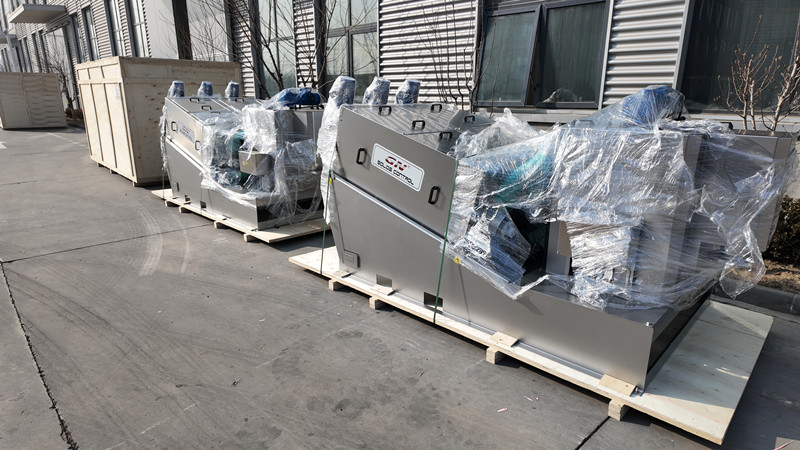
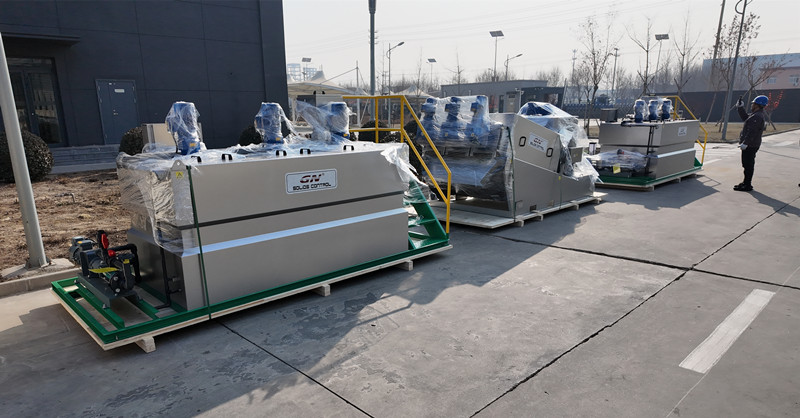
The export of a significant batch of inclined plate settlers and screw presses to overseas clients represents a notable development in the international trade of wastewater treatment equipment from China. These units serve critical functions in sludge management: inclined plate settlers are employed for primary concentration of sewage, effectively increasing sludge density, while screw presses act as the core dewatering equipment, often supported by dosing systems that supply flocculants to enhance solid-liquid separation. This movement of equipment underscores the growing global demand for efficient, compact, and cost-effective sludge handling solutions and reflects the competitive advancements in China’s environmental technology manufacturing sector.
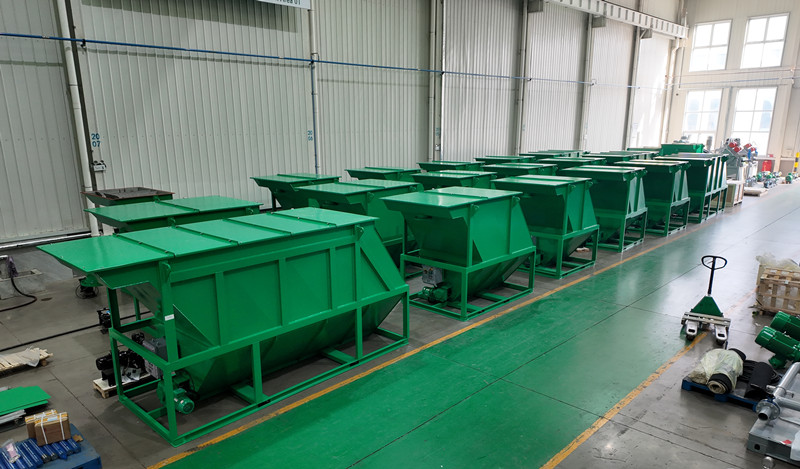
Inclined plate settlers, also known as lamella clarifiers, utilize a series of angled plates to provide a large effective settling area within a compact footprint. As wastewater flows through the unit, solid particles settle onto the plates and slide down into a collection hopper. This process results in a thickened sludge stream, reducing the volume of material sent for further dewatering and thereby lowering subsequent processing costs. The design principle is based on enhancing gravity separation efficiency, making it a reliable and energy-efficient pretreatment step. For export models, manufacturers emphasize robustness, corrosion resistance, and designs that comply with international standards to ensure compatibility with diverse water chemistries and operational conditions abroad.
The screw press, or spiral dewaterer, is a continuous-operation device that mechanically dewaters the pre-thickened sludge. It operates by conveying sludge through a cylindrical screen via a rotating spiral shaft. As the sludge progresses, pressure is gradually increased, squeezing free water through the screen. The addition of polyelectrolyte flocculants from an integrated dosing system is typically crucial; these chemicals bind fine particles into larger flocs, dramatically improving dewaterability and final cake solids content. Modern export-oriented screw presses are engineered for high dryness, low polymer consumption, and minimal maintenance. Features often include adjustable back pressure, wear-resistant materials for the spiral and screen, and fully enclosed designs to contain odors—a key consideration for many installation sites.
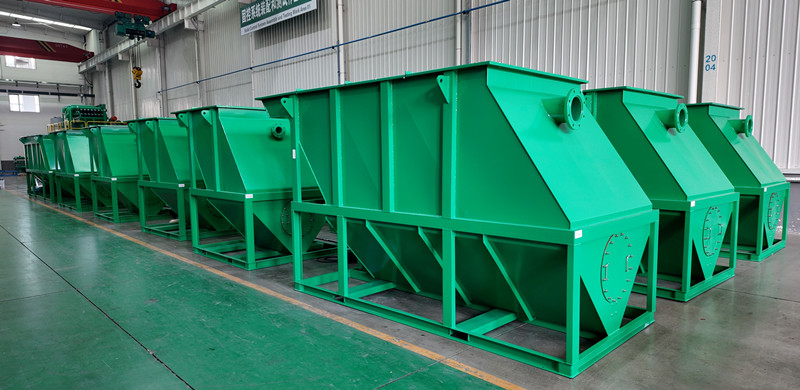
The concurrent export of these two technologies is strategically significant. They form a complementary processing train: the settler performs volume reduction, and the press achieves final dewatering. For international clients, particularly in developing regions or in industries with expanding wastewater treatment needs, acquiring this paired solution offers a complete, space-saving, and often modular answer for sludge handling. It eliminates the need for large, concrete settling tanks and can be more efficient than older centrifuge or belt press systems in terms of energy and water recovery.
Market drivers for this export trend are multifaceted. Globally, tightening environmental regulations on sludge disposal and a push for water reuse are compelling municipalities and industries to upgrade their treatment infrastructure. Chinese manufacturers have responded by refining their equipment to meet specific regional demands. For instance, units destined for coastal or high-humidity areas feature enhanced stainless-steel grades to resist chloride-induced corrosion. For markets with less stable power grids or limited technical expertise, designs prioritize operational simplicity, robustness, and include safeguards like overload protection.
The supply chain and manufacturing capability in China provide a core advantage. Concentrated industrial clusters for environmental equipment allow for efficient production, quality control, and cost management. This enables manufacturers to offer reliable products at competitive price points without compromising on core performance metrics. Furthermore, many companies now support their exports with comprehensive services, including multi-language manuals, remote technical support via digital platforms, and training for local operators. Some are establishing regional spare parts warehouses to reduce downtime for international customers, addressing a historical concern about post-sale service for imported machinery.
From a technical specification perspective, the exported equipment embodies several key improvements. Inclined plate settlers now often feature optimized plate angles and spacings calculated for specific sludge types, improving throughput and underflow density. Screw presses incorporate advanced control systems that automatically adjust spindle speed and back pressure based on feed sludge consistency, optimizing polymer usage and cake dryness. The integration of IoT sensors for monitoring pressure, torque, and motor amperage is becoming more common, allowing for predictive maintenance and performance optimization from afar.
The business model for these exports has also evolved. It frequently extends beyond mere equipment sales to offering process guarantees or performance-based contracts. Suppliers might guarantee a minimum cake solids percentage or a specific polymer dosage rate, sharing performance risk with the client and building deeper trust. This shift from commodity supplier to solution partner is crucial for penetrating more mature and regulated markets.
In conclusion, the shipment of a large batch of inclined plate settlers and screw presses overseas is a direct result of aligned factors: proven technology efficacy, adaptive product design for global applications, competitive manufacturing, and enhanced support structures. These devices address the universal industrial challenge of sludge reduction and disposal in an efficient manner. Their growing acceptance in diverse international markets signals a maturation phase for China’s environmental equipment sector, where success is increasingly defined by technical performance, reliability, and service, positioning these products as viable and preferred choices in the global wastewater treatment landscape