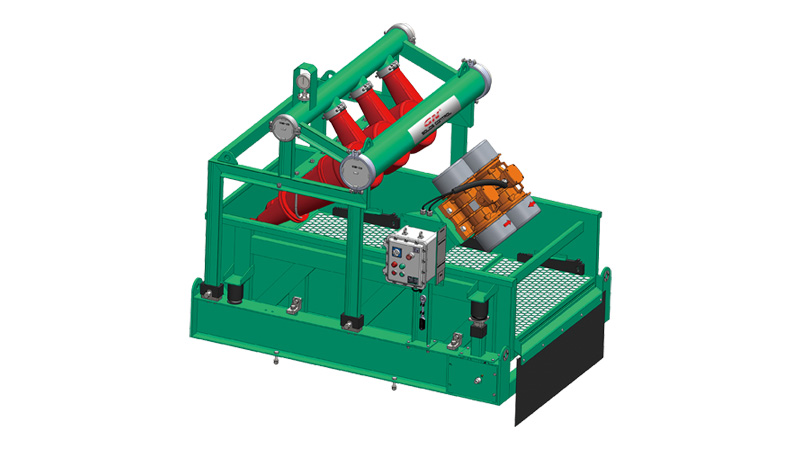
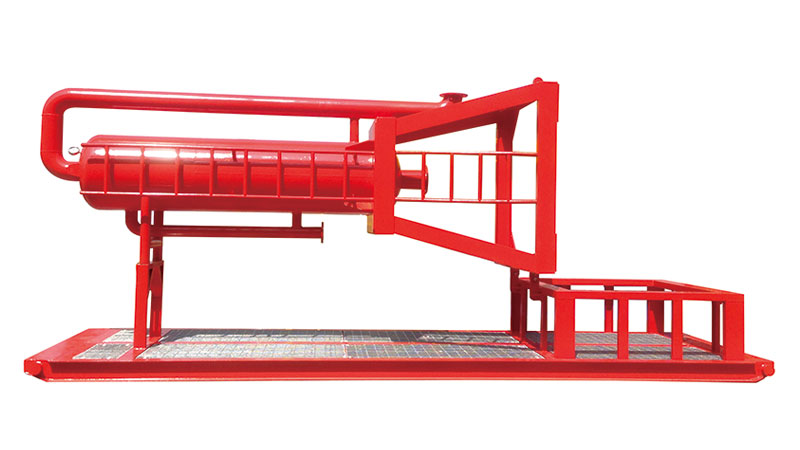
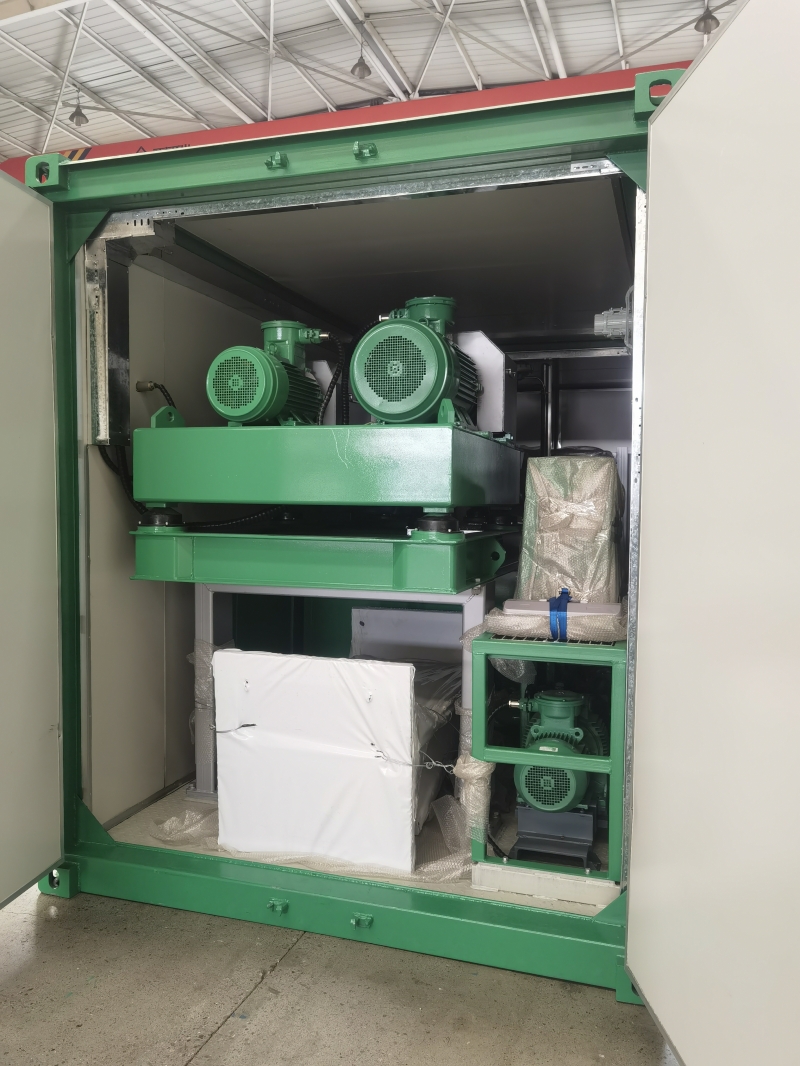
While our function of solids and liquid separation is really easy to say but in the background there are a lot of factors that are going on and we don’t see them or hear about them much. As one of them is the Mud Gas Separator. It not only takes out the gases from your mud or slurry but also removes the toxic gas that could harm one. It is designed for continued drilling in underbalanced conditions where dramatic pressure surges normally. Our GN Mud Gas Separator is manufactured according to API and ISO standards. While not just improving the production of the product flow and assisting the process to work better. It saves time and funds due to providing the material to be processed without additional gases that could slow the process. The gas cut mud enters the flow line of unit, where it hits a series of baffle plates. These plates provide surface area for the dispersion of the gas cut mud. This routed mud to solids control equipment for further processing, meanwhile the separated gas travels to the flare line at top of unit to vented safely from the rig. There are a few different types of mud gas separators, Today we are talking about a “poor boy separator”, it is really simple but unique and effective. Our model GNZYQ1000A is 1000m in diameter. It has a capacity of 200-280 m3/h. Four inch inlet and ten inch outlet with vent line of eight inch. It weights 2411 kilo grams and is 5681 mm in height. It is a large size equipment but has a compact footprint. There are also other types of degassers, some are vacuum degassers and centrifugal degassers. They are machine operated and require a current of electricity for operation to be functional. They are very different in sizes and dimensions, but have same function. Yet they are placed in different area of process control. Our products assist not just with better functionality but also safety of the operations. At GN Solids we manufacture the best product with different variety and above all, our pricing is unbeatable. 

Author Archives: mudcleaner
Decanter centrifuge model selection and waste water and oil sludge separation
When it comes to selecting decanter centrifuge models for wastewater treatment and oil sludge processing through three-phase separation, a test tube centrifuge is an invaluable tool for determining the most suitable centrifuge model. This method follows a specific procedure as following steps:
The customer is instructed to set the separation factor of lab tube centrifuge to 1200G for a duration of 2 minutes. If clear layering is observed during this process, it indicates that the centrifuge possesses excellent separation capability. However, if clear layering is not evident at 1200G, the setting is increased to 2000G for an additional 2 minutes. If clear layering is achieved at this stage, it suggests that a high speed centrifuge can also achieve effective separation.
The test tube centrifuge method plays a critical role in the selection process as it allows for a preliminary assessment of the centrifuge’s separation capabilities. By gradually increasing the separation factor and observing the clarity of the layers formed, it becomes possible to determine the optimal centrifuge model for wastewater treatment and oil sludge processing.
Clear layering is a vital indicator of a centrifuge’s ability to effectively separate the different phases present in wastewater and oil sludge. The presence of clear layering signifies that the solid particles have been successfully separated from the liquid phase, resulting in distinct layers. This separation is crucial for efficient treatment and processing, as it enables the removal of contaminants and facilitates the recovery of valuable resources.
However, if the centrifuge fails to achieve clear layering even at higher separation factors like 2500G or 3000G, it indicates that the separation efficiency may be compromised. In such cases, it becomes necessary to consider alternative separation methods beyond centrifugation.
In conclusion, the test tube centrifuge method is an essential step in the selection of centrifuge models for wastewater treatment and oil sludge processing. By gradually increasing the separation factor and observing the clarity of the layers formed, it becomes possible to determine the centrifuge’s separation capabilities. Clear layering indicates effective separation, while the absence of clear layering suggests the need for alternative separation methods. This careful selection process ensures the optimal choice of centrifuge models for efficient wastewater treatment and oil sludge processing.
HDD Mud Recycling System to Middle East
GN Solids Control just complete a HDD Mud Recycling System to Middle East. It is a 2-tank mud system includes shale shaker, combo-type mud cleaner for 3 stage separation. With feeding pumps, mixing pump and with mud mixing system, electric control system for all.
GN Solids Control has just successfully delivered a HDD (Horizontal Directional Drilling) mud recycling system.It is designed and made for the end user in the Middle East. The system is a two-tank system that incorporates a single deck shale shaker, a combo-type shale shaker with desander and desilter cones, which is also called as 3-in-1 mud cleaner. The system is made for three-stage separation. In addition to these key components, the system is equipped with centrifugal pumps for feeding and for mixing. And plus, there is a drilling mud mixing system, as well as an electric control system for all equipment.
This HDD mud recycling system is designed to handle the demanding requirements of Horizontal Directional Drilling operations, where the drilling fluid must be constantly circulated and reused. The shale shaker removes large solids from the mud, while the mud cleaner performs three stages of separation to further refine the mud. The feeding pumps and mixing pumps ensure that the mud is constantly moving through the system, while the mixing system keeps the mud properly mixed for effective drilling.
The electric control system provides for easy operation and monitoring of the system, allowing the operator to adjust the system as needed to meet the changing drilling conditions. This system is engineered to provide reliable, efficient mud recycling for Horizontal Directional Drilling operations, helping to improve drilling efficiency and reduce drilling costs.
With its wide range of capabilities, this GN Solids Control HDD mud recycling system is well-suited for a variety of applications in the Horizontal Directional Drilling industry. From providing effective solids control to ensuring the quality of the drilling fluid, this system is a valuable addition to any Horizontal Directional Drilling operation.
GNLW453D-VFD High-Speed VFD Centrifuge for Drilling Mud Treatment in China
GN Solids Control has recently completed the production of a batch of high-speed decanter centrifuges for a leading domestic drilling company. The order included six sets of centrifuges complete with VFD control panels. The model of the centrifuges is GNLW453D-VFD, which will be used for drilling mud processing.
Decanter centrifuges are essential equipment for the drilling industry, as they help separate solids and liquids from drilling mud. The high-speed centrifuges manufactured by GN Solids Control offer efficient and reliable performance, ensuring that drilling mud can be reused and recirculated. The inclusion of VFD control panels further enhances the performance and versatility of the centrifuges, allowing them to be adjusted to different operating conditions and process requirements.
GN Solids Control make various sizes of decanter centrifuge for 2-phase and 3-phase separation. The centrifuge size include mini size 9 inch, popular size 14 inch, big bowl 18 inch, 22 inch and the largest bowl 30 inch.
GNLW453D-VFD centrifuge is with 18inch big bowl. It is designed for heavy-duty applications, with big handling capacity. They can handle a wide range of drilling muds, including oil-based, water-based, and synthetic fluids. The centrifuges are also equipped with high-quality bearings and seals to ensure long-term reliability and low maintenance requirements.
This latest order from a leading domestic drilling company is a testament to GN Solids Control’s reputation as a trusted manufacturer of decanter centrifuges for the drilling industry. The company continues to invest in research and development to improve the performance and durability of its centrifuges, providing customers with cost-effective solutions that help them achieve sustainable drilling operations.
Besides decanter centrifuge, GN Solids Control make the full line drilling mud processing and transfer equipment, include shale shaker, mud cleaner, desander, desilter, vacuum degasser, mud gas separation, mud agitator, centrifugal pump, mud gun, mixing hopper, etc… , as well as drilling cuttings treatment equipment high G drying shaker, vertical cuttings dryer, etc…
GN Mini Solids Control Equipment for Mining Exploration
GN Solids Control offers a comprehensive range of equipment specifically designed for the mining industry, including the mini size shale shaker GNZS752J and the mini size decanter centrifuge GNLW223D. These compact and efficient machines are essential components of GN Solids Control’s full package slurry separation system, which is tailored to meet the unique requirements of the mining sector.
The GNZS752J mini size shale shaker is a high-performance vibrating screen that effectively removes solids from drilling fluids or slurry. Its compact design allows for easy transportation and installation in mining sites with limited space. With its dual deck configuration, the shale shaker provides enhanced separation efficiency, ensuring that the slurry is properly processed before further treatment. The adjustable G-force and deck angle settings allow operators to optimize the performance of the shale shaker based on the specific characteristics of the slurry.
Complementing the shale shaker, the GNLW223D mini size decanter centrifuge is designed to separate fine solids from the slurry. This centrifuge utilizes high-speed rotation to generate strong centrifugal force, enabling efficient solid-liquid separation. The mini size decanter centrifuge is equipped with a compact footprint, making it suitable for mining operations where space is limited. It offers adjustable differential speed and bowl angle settings, allowing for precise control over the separation process and ensuring optimal performance.
GN Solids Control’s full package slurry separation system for mining integrates these mini size shale shakers and decanter centrifuges with other essential equipment, such as mud tanks, agitators, and pumps. This comprehensive system is engineered to effectively remove solids and impurities from the slurry, improving the overall efficiency and productivity of mining operations. By achieving efficient separation and dewatering of the slurry, the system helps to minimize waste and maximize the recovery of valuable resources.
With a commitment to quality and innovation, GN Solids Control provides reliable and cost-effective solutions for the mining industry. Their mini size shale shaker GNZS752J and mini size decanter centrifuge GNLW223D, as part of the full package slurry separation system, contribute to the smooth operation and environmental sustainability of mining projects. Whether it’s for exploration, excavation, or processing, GN Solids Control’s mining equipment ensures optimal slurry management, enabling mining companies to achieve their production targets efficiently and responsibly.
GN Big Bowl Decanter Centrifuge for overseas mining tailing dewatering projects
GN Solids Control is a renowned expert in the production of a diverse range of decanter centrifuges and disc centrifuges. There are various sizes and models decanter centrifuge and disc centrifuge designed for 2-phase separation and 3-phase separation processes.
A truly exceptional achievement that sets them apart is the creation of a colossal 30 inch big bowl decanter centrifuge – a remarkable feat that only a select few manufacturers worldwide possess the capability to achieve. The model of the decanter centrifuge is GNLW764A-VFD, serves a crucial role in tailing slurry treatment for dewatering treating in mining industries. The big bowl is designed for big capacity.
This water treatment system comprises two sets of containerized systems: the centrifuge is positioned in the upper section of one container, while the chemical dosing unit is installed in a separate container placed below. These two systems are interconnected through a network of pipelines, and GN Solids Control ensures a seamless integration of internal connections and control across the entire setup.
Within this innovative design, the upper container houses the centrifuge, a critical component for efficient separation processes. Simultaneously, the lower container accommodates the chemical dosing unit, a vital element for optimizing the treatment process. The strategic placement of these units maximizes both operational efficiency and space utilization.
The synergy between these two containerized systems is facilitated by a comprehensive network of interconnected pipelines. GN Solids Control takes pride in delivering a solution that not only streamlines the interconnectivity of these units but also ensures efficient control mechanisms for the entire water treatment process.
The ingenious design and meticulous execution highlight GN Solids Control’s commitment to delivering holistic solutions for complex industrial challenges. This configuration underscores their expertise in optimizing space, enhancing efficiency, and providing integrated solutions that cater to diverse water treatment needs. By seamlessly bringing together the centrifuge and chemical dosing unit within a two-container setup, GN Solids Control continues to set industry standards for effective water treatment systems.
GN Screw Press Unit for Overseas Municipal Sludge Dewatering project
GN Solids Control, a renowned manufacturer of solid control equipment, has achieved remarkable success by exporting two units of their cutting-edge GNDL301 screw press dewatering unit to international clients engaged in municipal sludge dewatering projects. This innovative screw press dewatering unit, when combined with a chemical dosing unit, showcases exceptional efficiency in separating ultra fine particles from municipal wastewater.
In addition to their exceptional screw press dewatering unit, GN Solids Control boasts an extensive range of decanter centrifuges in various sizes, specifically designed for dewatering and wastewater treatment applications. These cutting-edge decanter centrifuges are engineered to effectively extract solids from liquids, finding widespread utilization across diverse industries.
GN Solids Control has earned a stellar reputation in the field of sludge dewatering and waste water treatment, owing to their unwavering commitment to delivering high-quality equipment. Their products are widely recognized for their reliability, outstanding performance, and cost-effectiveness, making them the preferred choice for clients worldwide.
By providing advanced solutions for solid-liquid separation, GN Solids Control continues to make significant contributions to the efficient and environmentally friendly management of municipal sludge and wastewater. Their state-of-the-art equipment empowers clients to achieve optimal results while adhering to stringent environmental regulations and sustainability goals.
With a steadfast dedication to technological innovation and customer satisfaction, GN Solids Control remains at the forefront of the industry, constantly pushing boundaries and setting new benchmarks for excellence. Their unwavering commitment to delivering top-of-the-line equipment and comprehensive solutions ensures that clients receive unparalleled support in their sludge dewatering and wastewater treatment endeavors.
In conclusion, GN Solids Control’s export of the GNDL301 screw press dewatering unit and their extensive range of decanter centrifuges exemplify their leadership in the field. Through their cutting-edge equipment and unwavering dedication, they continue to revolutionize the management of municipal sludge and wastewater on a global scale.
GN Solids Control Vertical Cuttings Dryer for OBM Treatment
GN Solids Control has established itself as a renowned manufacturer with a strong reputation for providing efficient solutions in the treatment of drilling waste. One of their flagship products, the Vertical Cuttings Dryer, is specifically designed to address the challenges associated with Oil-Based Mud (OBM) treatment. This cutting-edge equipment plays a vital role in separating drilling cuttings from the OBM, allowing for the recovery of valuable drilling fluids while minimizing waste.
At the heart of the Vertical Cuttings Dryer is the screw conveyor auger, a key component manufactured by GN Solids Control. These augers are meticulously designed to efficiently transport cuttings from rig shale shakers to the Vertical Cuttings Dryer for processing. By utilizing the screw conveyor auger, the cuttings are seamlessly and continuously fed into the dryer, ensuring a smooth operation and maximizing productivity.
In addition to the screw conveyor auger, GN Solids Control provides discharge augers that are integral to the Vertical Cuttings Dryer. These augers play a crucial role in the proper disposal of the processed cuttings. They effectively transport the dry cuttings from the dryer to waste pits and cutting bins, ensuring efficient waste management and compliance with environmental regulations.
The Vertical Cuttings Dryer, along with its associated augers, offers a comprehensive solution for OBM treatment. GN Solids Control’s equipment enables the effective separation of drilling cuttings from the OBM, facilitating the recovery of valuable drilling fluids and minimizing environmental impact. Their commitment to innovation and quality ensures that the Vertical Cuttings Dryer and augers are reliable and efficient tools that meet the demanding needs of the drilling industry.
GN Solids Control’s dedication to providing cutting-edge solutions for drilling waste management has solidified its position as a trusted partner in the industry. Their Vertical Cuttings Dryer, screw conveyor augers, and discharge augers exemplify their commitment to delivering high-quality equipment that enables efficient and sustainable drilling operations. With their expertise and focus on customer satisfaction, GN Solids Control continues to drive advancements in drilling waste treatment and contribute to a cleaner and more sustainable future for the industry.
Scalping shale Shaker in Oil and Gas Drilling Operations
The scalping shaker plays a vital role in the oil and gas drilling process. It is the primary equipment used to remove large solids and cuttings from the drilling mud before it enters the next stage of the solids control system.
During drilling operations, solid cuttings are generated as the drill bit penetrates the rock formations. These cuttings must be removed from the drilling mud to maintain drilling efficiency and protect downstream equipment. The scalping shaker is specifically designed to achieve this.
The scalping shale Shaker consists of a vibrating screen or a series of shaker screens that are designed to separate the larger solids from the drilling mud. The screens are carefully selected to allow the fluid to pass through while retaining the solids. The vibrating motion of the shaker helps to effectively convey the separated solids off the screens.
The scalping shale Shaker is typically positioned after the flowline from the wellbore and before other separation equipment such as hydrocyclones or decanter centrifuges. By removing the larger solids at this stage, the subsequent separation equipment can operate more efficiently and effectively.
In addition to removing solids, the scalping shale Shaker also helps to maintain the properties of the drilling mud. By removing the larger cuttings, the shaker helps to control the density and rheological characteristics of the mud, ensuring optimal drilling conditions.
The selection of the scalping shale Shaker is based on factors such as the drilling conditions, mud flow rate, desired separation efficiency, and available space on the drilling rig. The shaker must be robust and durable to handle the demanding drilling environment, with features such as corrosion-resistant materials and a reliable vibration mechanism.
GN Solids Control offers a wide range of scalping shale Shaker specifically designed for oil and gas drilling applications. These shakers are engineered to provide efficient solids removal while minimizing maintenance requirements. With advanced features and high-quality components, GN Solids Control’s scalping shakers are trusted by drilling operators worldwide for their reliability and performance.
In conclusion, the scalping shale Shaker is a crucial component of the solids control system in oil and gas drilling. It effectively removes larger solids and cuttings from the drilling mud, ensuring the smooth operation of downstream equipment and maintaining drilling efficiency. GN Solids Control’s range of scalping shakers provides reliable and efficient solutions for the demanding conditions of the oil and gas drilling industry.
Centrifugal sand pump in oil and gas drilling field
Centrifugal pumps play a crucial role in the oil and gas drilling field. They are commonly used for various applications, including:
Mud Circulation: Centrifugal pumps are used to circulate drilling mud during the drilling process. The pumps help to transport the drilling mud from the mud pit to the drilling rig and then through the drill pipe to the drill bit. They maintain the necessary pressure and flow rate to cool the drill bit, remove rock cuttings, and provide lubrication.
Mud Mixing and Conditioning: Centrifugal pumps are utilized to mix and condition drilling mud by adding chemicals, additives, and weighting materials. These pumps ensure proper blending and consistency of the mud, which is essential for maintaining drilling stability and controlling formation pressures.
Drilling Fluid Transfer: Centrifugal pumps are used for transferring various fluids in the drilling field, including water, brine, diesel, and other chemicals. They help in supplying water for drilling operations, transferring fluids between storage tanks, and facilitating the movement of fluids within the drilling rig.
The diameter of the impeller in a centrifugal sand pump has an impact on the flow rate and head.
Flow rate: Generally, an increase in impeller diameter leads to an increase in the flow rate of the sand pump. This is because the increase in impeller diameter results in higher rotational speed, which in turn increases the centrifugal force of the pump. The increased centrifugal force allows more liquid to pass through the pump, thereby increasing the flow rate.
Head: The impeller diameter also affects the head of the sand pump. Typically, an increase in impeller diameter leads to a decrease in the pump’s head. This is because the increase in impeller diameter reduces the rotational speed of the centrifugal pump, resulting in a decrease in centrifugal force. The reduced centrifugal force leads to a decrease in the pump’s head.
It is important to note that the relationship between impeller diameter, flow rate, and head is interconnected and influenced by other factors such as pump design and impeller shape. Therefore, in practical applications, GN Solids Control suggests users to consider multiple parameters to determine the optimal impeller diameter that meets specific flow rate and head requirements. For specific applications, it is recommended to consult with professional engineers or pump manufacturers for more detailed and accurate information.