Category Archives: Uncategorized

Sludge Dewatering Screw Press

A sludge dewatering screw press is a type of mechanical equipment used in wastewater treatment plants and other industrial applications to separate liquids from solids in sludge. Sludge, which is a byproduct of various processes such as wastewater treatment, can contain a significant amount of water. The dewatering screw press helps to reduce the moisture content of the sludge, making it easier and more cost-effective to handle and dispose of. Sludge is fed into the screw press through an inlet hopper or conveyor system. The sludge may be pre-treated or conditioned to improve dewatering efficiency. Inside the screw press, there is a rotating screw or auger mechanism. As the screw rotates, it moves the sludge along the length of the press. Along the length of the screw press, there are dewatering zones where the sludge is subjected to increasing pressure. This pressure helps to squeeze out the water from the sludge solids. The pitch of the screw gradually decreases along the length of the press, which leads to increasing compression of the sludge. This compression further aids in separating the water from the solids. Some sludge dewatering screw presses are equipped with a perforated or mesh screen along the length of the press. This screen helps to separate the liquid (filtrate) from the solids as the sludge is compressed and forced through the screen. The separated liquid (filtrate) is collected and discharged through an outlet, while the dewatered sludge cake is discharged from the end of the press. The dewatered sludge typically has a higher solids concentration and lower moisture content compared to the original sludge. Benefits of using a sludge dewatering screw press, reduction in sludge volume: By removing water from the sludge, the volume of sludge is significantly reduced, leading to lower transportation and disposal costs. Increased solids concentration: The dewatered sludge cake has a higher solids concentration, which may facilitate further processing or disposal. Lower environmental impact: Dewatered sludge is easier to handle and may be more suitable for environmentally friendly disposal methods such as composting or incineration. Overall, sludge dewatering screw presses are an efficient and effective solution for reducing the moisture content of sludge, providing economic and environmental benefits for wastewater treatment plants and industrial facilities.

2020.09.10 screw press dewatering machine

Sludge Dewatering Centrifuge

A sludge dewatering centrifuge is a specialized piece of equipment used in wastewater treatment plants, industrial processes, and other applications where there’s a need to separate solids from liquids efficiently. Sludge is a semi-solid material produced during the treatment of wastewater, and dewatering is the process of removing water from this sludge to reduce its volume and make it easier to handle and dispose of. The centrifuge works on the principle of centrifugal force, which is the force exerted on an object moving in a circular path due to its inertia. In a sludge dewatering centrifuge, sludge is fed into a rotating drum or bowl. As the drum rotates at high speed, centrifugal force pushes the solids to the outer edge of the drum, while the liquid (water) is forced towards the center. The separated liquid is typically discharged through a separate outlet, leaving behind dewatered sludge cake on the inner wall of the drum. This dewatered sludge cake has a much higher solid content and lower moisture content compared to the original sludge, making it easier and more cost-effective to dispose of or further process. Sludge dewatering centrifuges come in various types, including decanter centrifuges, disk-stack centrifuges, and basket centrifuges, each with its own advantages and applications. Decanter centrifuges, for example, are commonly used for thickening and dewatering applications in wastewater treatment plants due to their continuous operation and high throughput capabilities. With our expertise and how we develop our equipment, using the best material there is to offer. GN uses duplex stainless steel SS2205 and SS2304 for the casting which is better than the SS304 and SS316. Also flexible pond depth adjustment for different material separation. The air-operated spring for assisting open of the cover with safety locking system. Our centrifuges go through three stages balancing process to maximize balancing of the centrifuge. It goes through a low speed of 1800 RPM balancing and real operation high speed balancing as well. The internal parts such as the screw is protected by interchangeable tungsten carbide tiles for longer life and easy maintenance. Also the screw is made up of stainless steel with heat treatment and the opening impeller will improve the centrifuge capacity. It comes with the option of single lead or double lead screw. GN centrifuge is well used over the world and is being required by a lot more operations due to its cost and the results of its operation.


Shale Shaker


Mining vibrating screen

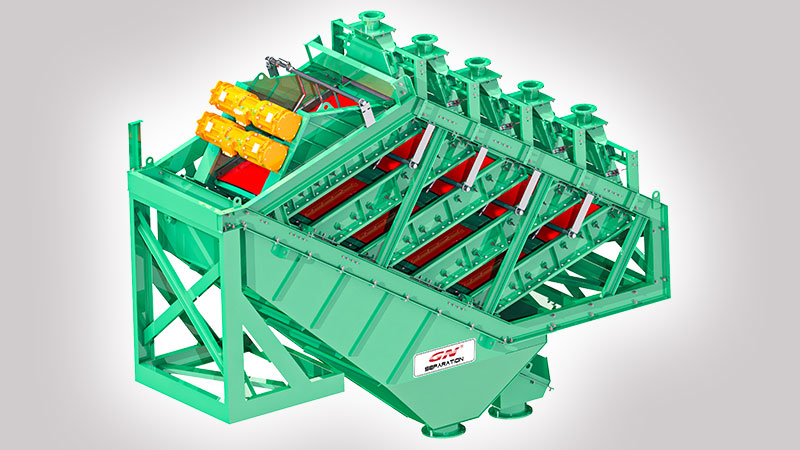
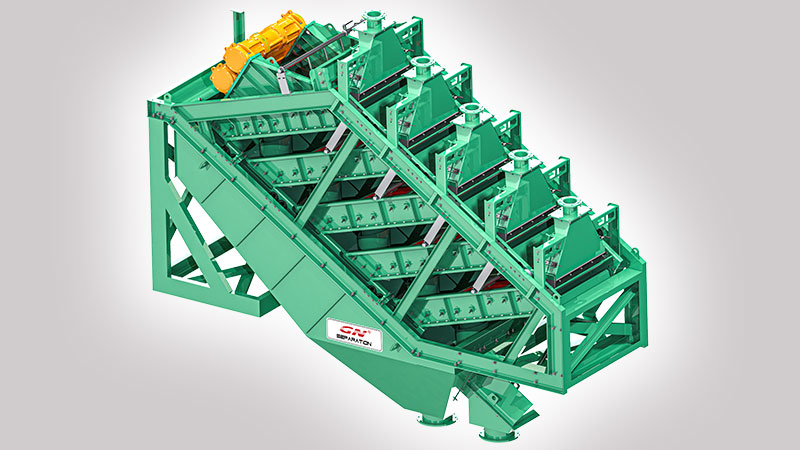
A mining vibrating screen is a piece of equipment used in the mining industry to separate materials based on their particle size. It employs vibrating motors or exciters to generate vibrations, which cause the material on the screen surface to move in a controlled manner. These screens are often used in various stages of the mining process, such as primary screening, scalping, or dewatering. Here are some key features and functions of a mining vibrating screen. Screening Efficiency –  Mining vibrating screens are designed to efficiently separate materials of different sizes. They utilize different screen deck arrangements and screen openings to achieve the desired separation. Vibration Mechanism – Vibrating screens use either eccentric shafts with eccentric weights or electromagnetic vibrators to generate vibrations. These vibrations cause the material to move across the screen deck, facilitating separation. Screen Deck Configuration – Screens can have single or multiple decks, depending on the application. Multiple decks allow for the separation of materials into different size fractions simultaneously. Screen Media – The screen media, such as woven wire mesh, polyurethane panels, or perforated plates, play a crucial role in the screening process. The choice of screen media depends on factors like the material being processed, required throughput, and wear resistance. Dewatering – In some cases, mining vibrating screens are used for dewatering purposes, removing excess moisture from the screened material. This is especially important in applications where the final product needs to meet certain moisture content specifications. Heavy-duty Construction – Mining vibrating screens are typically built to withstand harsh operating conditions in mining environments. They are constructed with robust materials and reinforced components to ensure durability and longevity. Adjustability and Customization – Many mining vibrating screens offer adjustability in terms of amplitude, frequency, and angle of inclination to optimize performance for specific applications. Maintenance and Safety – Proper maintenance is essential to ensure the smooth operation of vibrating screens and prevent downtime. Additionally, safety features such as guards and safety switches are incorporated to protect operators from potential hazards. Overall, mining vibrating screens are indispensable equipment in the mining industry, contributing to efficient material handling, processing, and separation. They play a crucial role in improving productivity and product quality in various mining operations.


2023.10.10 Large Linear Vibrating Screen


2323.10.10 Large Flip Flow Screen

Vacuum Degasser

A vacuum degasser is a piece of equipment used in various industries, including but not limited to oil and gas, chemical processing, and food and beverage production. Its primary function is to remove dissolved gases, primarily oxygen and carbon dioxide, from a liquid mixture. The GNZCQ is our vacuum degasser which meets the needs of any application, installed after the shakers. Each degasser effectively and efficiently removes gases from gas-cut mud and ensuring that the proper mud weight is pumped downhole. The degassers are able to aid in the prevention of potential blowouts. At GN, our degasser is self contained, and is monitored by level sensor to protect over suction of the fluids. In many industrial processes, the presence of dissolved gases can be detrimental. For example, in the oil and gas industry, dissolved gases in drilling mud can lead to various issues such as reduced drilling efficiency, corrosion of equipment, and decreased performance of downhole tools. Similarly, in food and beverage production, dissolved gases can affect the taste, appearance, and shelf life of products. A vacuum degasser typically consists of a vessel or tank equipped with a vacuum pump. The liquid mixture containing dissolved gases is introduced into the vessel, and the vacuum pump creates a low-pressure environment inside the vessel. As the pressure drops, the solubility of gases in the liquid decreases, causing them to come out of solution and form bubbles. These bubbles are then removed from the liquid by the vacuum pump, effectively degassing the liquid. Vacuum degassers come in various designs and sizes, depending on the specific application and volume of liquid to be treated. Some degassers may use additional components such as baffles or trays to enhance the degassing process. The efficiency of a vacuum degasser depends on factors such as the vacuum level achieved, the contact time between the liquid and the vacuum, and the design of the degasser vessel. Overall, vacuum degassers play a crucial role in ensuring the quality and performance of industrial processes by effectively removing dissolved gases from liquid mixtures. Our vacuum degasser can actually work as a big agitator for the drilling mud, which helps the treatment for desander and desilter. Playing multiple roles to assist the operation and help with the process in multiple roles. Our degasser could be used in multiple industries and is among a great equipment for your operations system.


Cutting Dryer

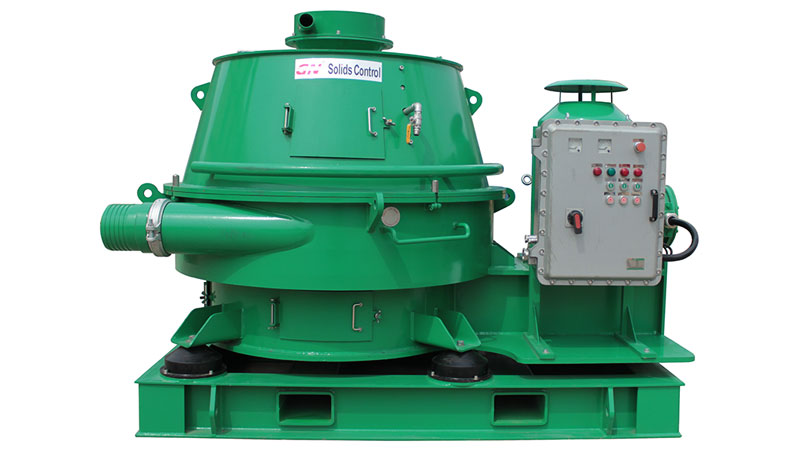
An oil and gas cutting dryer, also known as a cuttings dryer, is a critical piece of equipment used in the process of drilling for oil and gas. During drilling operations, drilling mud or drilling fluid is used to lubricate the drill bit, carry cuttings (rock chips) to the surface, and provide stability to the wellbore. However, this drilling mud becomes contaminated with drill cuttings and other solid particles as it circulates through the well. The oil and gas cutting dryer is designed to separate these solid particles from the drilling mud, allowing for the reuse of the mud and the disposal or further treatment of the cuttings. This separation process helps to maintain drilling efficiency, reduce environmental impact, and comply with regulations regarding drilling waste disposal. The basic operation of a cutting dryer involves several stages. Feed Inlet is the contaminated drilling mud, along with the drill cuttings, enters the cutting dryer through a feed inlet. Screening and separation processes  inside the cutting dryer, the mud and cuttings pass through a series of screens or sieves. These screens allow the mud to pass through while retaining the solid cuttings. Drying stage occurs after separation, the cuttings are subjected to a drying stage. This can involve centrifugal force or other mechanisms to remove excess moisture from the cuttings, making them easier to handle and transport. Discharge of dried cuttings occur once dried, the cuttings are discharged from the cutting dryer, typically into a collection bin or conveyor for further processing or disposal. Recovery of clean mud happens when  the cleaned drilling mud, free from solid particles, is collected and returned to the drilling operation for reuse. Oil and gas cutting dryers come in various designs and configurations, including vertical and horizontal models, depending on the specific requirements of the drilling operation. They play a crucial role in the overall efficiency and environmental stewardship of oil and gas drilling operations by facilitating the recycling of drilling fluids and reducing the volume of waste generated. It can be used for oil based mud or water based mud. In order to be used in the water based operation, it needs a special water injection system for not getting build up or the mud causing it to jam. With the best products used to develop our system, such as our bearings from FAG, we have a great product with amazing productivity.